Looking forward to Walk A Mile, coming February 10. My company supports the effort. We have formed a team, and anyone is welcome to join us. Leave me a comment if you have questions.

Find CFD Kokomo on Facebook or search @cfdserveday on FB
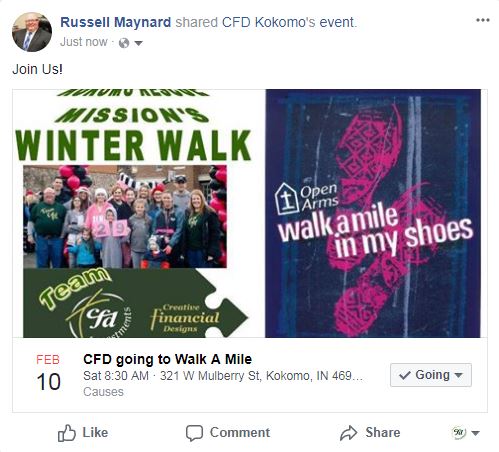

Looking forward to Walk A Mile, coming February 10. My company supports the effort. We have formed a team, and anyone is welcome to join us. Leave me a comment if you have questions.
Find CFD Kokomo on Facebook or search @cfdserveday on FB
The professionals at this company share some great tips. This one is about managing issues that arise on a project. Having a process in place to manage issues will save the PM tons of grief, especially when in the “heat of the battle.”
Learn Jennifer’s 7 strategies for effective issue management for your projects so you can successfully monitor & minimize project issues.
Source: Issue Management for Projects
In my former life as a Project Manager- cloaked as Youth and Family Minister – I saw a significant need for generational healing in the church setting. I saw over and over the fiery zeal of youth extinguished by direct or perceived criticism of effort or intent. On the other side, it was not uncommon to hear seasoned people include “these kids these days…” in their conversation. I also heard a lot of how useless and dumb older people were coming from the other direction. I thought… “that’s stupid”… and I set about to do something about it. I talked with a lot of people and explored a lot of ideas and the outcome of the quest was a successful leadership program for youth that sought team up people across generations for something bigger than themselves.
Fast forward and I have transitioned to Project Management in the business world. The transition was a positive one for a positive reason, in case you are wondering. I work for a great company and I deal with lots of companies daily. I don’t get taken aback that often, but I’m taken aback when I see the same dynamic playing out in the business world that I saw in the young folk’s world in the past.
I’m excited to hear of the initiatives to connect millennials. Smart companies are restructuring how they do business and what the work place looks like. Cities are being rebuilt with millennials in mind. All of this I get excited about for the future – even though I passed up the targeted age group a good while back. Honestly speaking, however, that doesn’t mean it’s all good or the most productive way to do all things. I’m digesting everything I can on more flexible project management approaches. It’s good, but it’s not all good.
On the other hand, I hear – let’s call them “seasoned professionals” (actually, I qualify) – still lamenting the “kids these days”. Attitudes, dress code, approaches to using the tools (i.e. phones), work ethics -and on and on – permeate discussions. Are the generalizations true? Sometimes, but not always. I have learned that sometimes people on their phones in my meetings are doing work for me… not playing games – or maybe they are doing both. I have also learned that someone who is anxious about a software enhancement isn’t dead yet – and has tremendous value to offer.
There are efforts on many fronts to be inclusive and to break down barriers. I see more about one generation “breaking the other” than I do the breaking down barriers between age groups. And that is stupid. I believe enormous business value is being missed over this dynamic – and I want to do something about it. It’s what I do. My motto is, “I’m not afraid to be wrong, but I’m not going to do nothing with projects and people entrusted to my care”. There’s far more wisdom out there than I have – regardless of age group. If you are willing, please share your thoughts or your answers to these questions.
What commonalities span all age groups as points of agreement?
What business functions or tasks do you see that a “cross generation” team could benefit? What are the things in business or client relationships that are “bigger” than age?
What efforts have you see to bridge the generations at work?
During the Summer of ’17 my company provided a Summer Internship Program and I became heavily involved in it – and I’m as convinced as ever that it’s a powerful opportunity for the student as well as for the company. We’ve said goodbye to our Interns for this year and wished them well – yet I’m amazed at the positive experience it was for them… and us.
I’ve had Interns in my former life as a youth minister, as a matter of fact, it was serving as an Intern that started me on that path years ago. However, managing an Internship for a business, since I have moved to Project Management, made me wonder how it would go. In addition to “hire the right people” which thankfully, we did – there are a couple of things we got right, I think – that helped us have a successful program. Nothing like this is perfect, but these things stand out to me as helpful.
Plan Ahead
As the Project Manager, I touch most of the departments in our company. So long before the Interns arrived, I called a meeting with members of each department that I work with, to explore how the Interns might help them, and how they might help the Interns. We figured out that not only could we keep them busy with the backlog of things we can’t seem to get to but we could make them a part of each team.
Include
A big piece of our Internship Program was to keep our Summer folks busy – and that we did. There’s always a need for catching up on a number of processes. However, we strove to also include the Interns in our team meetings, and seek their input – and it was helpful information. Our Interns left not only having contributed to tasks, but participating in active discussions.
Guide to Lead
We included our Interns on actual project work and had them lead and present. Each Intern was able to make a short Project Update presentation at our Department Head Meeting. They stepped up to the challenge. To help them, I previewed their presentation with them to make sure it wasn’t all “new”. This was very well received all the way around.
Mentor
Toward the end of each day, I met with the Interns briefly to talk about their day. Sounds like too much work? Not a chance, it was enlightening for me, and I think for them. I was able to answer questions, explain the business models, and receive helpful feedback from them.
I’m a strong believer that an Internship Program is some of the best money spent for a host of reasons. If given this opportunity again, I’ll jump on it. It was a value add to our company, staff, and to our Interns.
Do you have a favorite soup? Do you like a Lean Gumbo? Or do you prefer a Six Sigma Stew? The strength of your efforts depends upon what goes in the bowl. Why limit yourself? Let the situation serve up…
Source: Infographic: Lean – or – Six Sigma? – GoLeanSixSigma.com
Sister Maynard, the “Hillbilly”
As I progress through this journey called life, I have come to realize that life is a Great Production. When we arrive on the planet, a Script is envisioned. As we leave home, another Script is likely written, and the actual Script of Life is altered day to day, year to year. Those who rely on the Great Script Writer inspire me the most. Such is Jane Maynard, commonly known as “Jane the Hillbilly”. She’s not only my mom, but a pillar demonstrating unswerving faith in God’s will regardless of her circumstances. She has navigated many a Script change, and now has arrived at a point to acknowledge that the Great Script Writer has another plot twist and different kind of adventure ahead.
A High School dropout (to care for ailing family) would seem to limit the Script, in most reader’s eyes. Hard work lay head caring for family and eventually completing her High School Diploma through correspondence courses. Not to be side tracked, she fell in love with a gentleman from the Air Force, married, and they became my parents. The story took a devastating turn – few can appreciate – as my dad’s severe mental illnesses raised their head at a time in history when such things were vaguely understood. Tasked now – not just with being mom, but being mom and dad – while loving God and dad enough to make dad think he was dad – a Script complexity that would endure so many years. She now says that made her more dependent on God. There are no words to adequately describe this part of the Story. Dad’s journey ended in final rest some years ago but Jane’s Script continues. However, it’s now taking a different turn.
I have no memory of her ever doubting the Great Script Writer – even though I have often. Somehow in the midst of raising her children, and fostering other’s children, and caring for her husband, she found time to earn a Bachelor’s Degree in Bible. Even though I spent years in the ministry, I always marveled at her wisdom and teaching at home and abroad. She easily and justifiably could have written a sympathy laden Script – but not Jane. She has been and continues to trust and seek the Great Script Writer for her next move. I recently sat beside her in a little church in Arkansas that hasn’t changed in all my years.
I enjoyed her prominent Alto singing like I have never before. This time my mind did not run to suggestions for the church to improve, as it has before. I just listened and appreciated the blessing of the moment. You see, recently Jane had a Stroke that took her and all of us by surprise. Her temporary inability to talk or function not only shocked us – it brought about a reality. I’m happy to tell you that this was a light stroke, and she is recovering well – and she’s still open to whatever God wants. We all want that because she wants that. But, it is time for Jane to serve in a different way. The Great Script Writer has something else in mind. In partnership with her God, Jane allowed God to write an unlikely story that included some of the following:
• For 50 years she has taught ladies’ classes and planned and coordinated events honoring Christ for Ladies.
• She has traveled all over the nation speaking and counseling ladies in the name of the Lord. It makes her mad, but I still say no one can preach better than she can – but only to ladies of course.
• I never visit when she isn’t cooking food for someone, helping someone tend to their business, or just listening and offering godly counsel. And the list could go on and on.
Jane’s Script now includes stepping down from leadership roles but she’ll still include in the Story the encouraging and assisting of others to lead and bring the healing of Christ to God’s ladies. She’s comfortable and confident that God will use her where He wishes – and that is what she wants. She probably won’t travel as much in this this new Script. Likely she will serve by writing and encouraging with few if any speaking engagements. However, she told me plainly, “I will always serve the Lord.” And I believe it. As her son, I know she trusts the Great Script Writer most of all. And I know she wants me and YOU to always do the same.
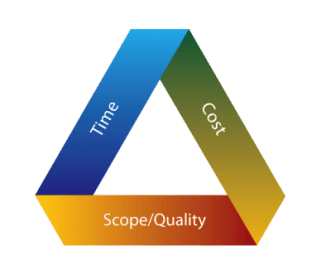 There’s a reason that the professional PM courses are so meticulous about the scope of your project. I’ve learned the hard way that either you manage it, or it will manage you. I have come to really appreciate the need for managing change through a change board or incrementally managing it through Agile methodologies.
While on a journey of any sort, when you arrive is one thing – and how much it costs to get there is an other – but where you end up is the biggest kahuna of all –usually. I am involved with an IT Project on which I let that slip away from me. No question about intentions or plans – that was very clear, and very public. In the midst of targeting specific deliverables, I had another regulatory firm changing project enter my sphere that I allowed to take my eyes off the original project – for just a short time. When I regrouped, I realized that the urgent and focused deliverables we started with – had been sidelined by well-meaning team members, in favor of escalating another deliverable planned for a later date.
I have now taken corrective action and am relieved that the deliverable I need done first will be delayed only a short time with the added benefit of the next deliverable phase being finished earlier than expected. Not too much harm in this situation. I recognize that it should not have happened in the first place, and that stops at my door. I also recognize that I could find myself working a project where the consequences for allow this to happen could be grave. Here are some of my lessons learned:
I’m definitely learning a lot in my Project Management Career. Any suggestions or add ons are welcome!
Kokomo, Indiana isn’t a huge city, but just like any other city, there are people who struggle and are displaced from shelter and basic needs. Our Rescue Mission is a terrific area wide ministry that assists homeless men with the transition from homelessness to gaining a  better life. In the same vein, Open Arms performs this function for women and children. Each year, our city has “Walk A Mile” to support Open Arms. It is a gentle fund raiser for which individuals or teams of people can collect free will donations to support Open Arms. It all culminates on a Saturday in February. On that day, money is turned in and participants are invited to walk the mile between the Rescue Mission and Open Arms and learn how life is for folks there.
I’ve participated as a youth minister in years past, and this year I was privileged to lead a team as the Project Manager for my work place, cfd Investments, Inc. There were about 20 walkers on February the 11th of 2017. In addition there were hosts of donations by our staff and many paid money into the fund in exchange for jeans day – a common practice at CFD.
The event was amazing! We raised a significant sum of money, especially for the first year of doing it, and participated in the Walk. It was great to add it to the total the community raised for Open Arms. We should be making a difference wherever we are, and this is a great opportunity for those in the Kokomo and Open Arms is doing exactly that. I’m proud of the people in my company for taking on this challenge and I look forward to other opportunities to do the same in the future.
I love this product! This company is a great friend to Project Managers!
Source: XMind » Blog Archive » How to effectively use XMind for project management?
Keeping track of paperwork in a sprawling organization requires focus and tools. Docupace offers these suggestions on their blog.
Source: 3 simple ways to drive compliance, visibility and oversight
A couple of years ago I made a significant move in my career. I transitioned from youth ministry to a career in project management. While there are differences, I’ve learned that there are stark similarities in the two paths. One of those similarities is that Professional Development is a must have ongoing commitment. A minister can tire with constant pressure to produce while working with people to get the job done… guess what? It’s the same or more so with Project Managers!
My journey has allowed me to achieve PMP Certification with Project Management Institute. I also am privileged to be a member of PMI’s Central Indiana Chapter. I’m on the team that has acquired speakers for our upcoming Professional Development Day, and I can’t wait for it! It’s the largest leadership gathering in Indiana focused on Project Management.

It is a full day of exciting Key Notes and informative break out sessions. Those who attend will enjoy interaction with vendors, career development, networking opportunities, and Project Management education.
I’m gonna be there… look me up if you are too!
Simply put, life goes better when humans we encounter are seen as people… again, seen as PEOPLE. This is underscored by current events, especially lately. In my experience thus far as a Project Manager, seeing people as people is key to successfully managing projects. I’m excited about the next speaker at PMI Central Indiana Chapter (PMICIC) because the topic is “People Matter: Know Your Talent”.
Being a member of Project Management Institute (PMI) and my journey to Project Management Professional certification has given me tools to work with that I frankly didn’t previously know existed. The PMBOK provides a detailed road map to help navigate any project. It doesn’t mean you take every route possible to get to your destination, but it’s really nice to have lots of options. Repeatedly throughout my studies and my interactions with PMI, it has been emphasized that Project Management is mostly about communication – and that’s means it’s about people. One can have the most technically correct and functional plan – but without people understanding it and engaging the plan… it’s incomplete.
I love being a member of a local chapter of PMI (PMICIC). When I think of my chapter, a word picture comes to my mind. PMI is a phenomenally recognized global organization and the PMBOK is a very technical road map, however PMICIC puts “skin” on all that for me. PMI majors in contemporary uses for tried and tested tools for any PM challenge. However, PMICIC adds the “people” part for me. I always learn a lot – and I can network with a host of local professionals – who’ve done this stuff in a context I can grasp and apply practically. And that’s real value, in my view.
Needless to say, I’m very happy that Ellen Decker will be speaking on July 20 for PMICIC’s monthly dinner. Her topic is “People Matter: Know Your Talent” and I’m looking forward to a powerful presentation that will help put “skin” on Project tools. Visit pmicic.org to learn about the dinner and much more about this powerful organization. If you are thinking about PMI, just do it. It’s worth it. And plug into a local chapter if at all possible. I really think you will be glad you did!
I usually note my PMP credentials after my name, especially in professional settings. I haven’t met many project managers who don’t know what it means. Admittedly, it’s pretty entertaining to hear suggestions from the unfamiliar on what it could possibly mean. The PMP is one of several gold standard certifications that the globally recognized Project Management Institute provides to project managers who meet stringent requirements. PMI.org documents offer a number of reasons for acquiring certification. This is all reason enough to join PMI, but I have a few other reasons.
My affiliation with PMI as well as the education I gained in preparing for the PMP Exam has equipped me with amazing tools of the trade. Thus far in my career, I haven’t had the opportunity to use some of the tools I gained, but having them has opened my mind and my view of successful project management. I use a certain tool set currently and I am confident that I have a strong foundation for whatever project management opportunities may come my way. PMI isn’t a distant governing body, the organization provides additional tools, contemporary news in project management, and has resources for just about any question one can ask about managing a project. The global aspect is assuring as well in our growing global economy.
I believe the most powerful benefit I have received is also joining my local chapter for PMI. I’m a member of and volunteer for the 1,400 member PMI Central Indiana Chapter. In addition to the power of PMI the chapter offers a way to put “boots on the ground” if you will. I enjoy working with a host of other volunteers for the chapter under the guidance of the board of directors. Amazing opportunities are offered to network with other professionals and to gain education in the field of project management. Members gain training and Professional Development Units when participating (required for maintain certification). Some of the activities of the chapter include:
It took a lot of commitment, but I don’t regret becoming PMP certified – in the least. I also benefit greatly from our local chapter. If you have interest in connecting with project management professionals in Central Indiana, find PMICIC on Facebook or Twitter or visit our Website.
To help smooth a transition to a paperless office, firm leaders should be ready to counteract common misperceptions and offer proactive strategies. Here’s how.
Source: Realizing the Promise of the Paperless Office, At Last | Financial Planning
I officially began my career in Project Management in a business setting on October 6, 2015. Before that I served as a youth and family minister who did a whole of projects in the church setting. It’s an interesting comparison and contrast. The journey from my former career started with acquiring PMP certification followed by a roller coaster ride of searching for a career opportunity. Since being hired as a project manager, I’ve learned a whole lot, and continue to learn a lot more every day. I was asked recently what I think is important when beginning a career in Project Management and that caused me to think of these things.
Don’t be afraid to be wrong. There’s a lot to be said for giving it your best shot while being correctable and teachable. I have found more tools (usually for sale) to manage projects than I can possibly ever understand. Certifications offer a host of tools best used not as a standard to achieve, but as a toolbox from which to pull. Sometimes you can see much of what has to be done, and sometimes it’s foggy. That human tendency to not make a move until you have checked, double checked, verified every detail will make it tough to progress. Study the project’s needs and proceed in a direction until you know better. When you know better, do better.
Don’t do “nothing” on your project (s). This statement follows the first point, in my motto. Get past the fear of being wrong, and then be tenacious about the project. In a world where the absolute least effective way to communicate (email) is used most, by far – well, I just don’t think a PM can be content with that much of the time. Communicate, communicate, and communicate. Whether it’s a powerful schedule program, an excel sheet, or a post-it on your nose, find a way to track the lose ends. Those are the things that have been my gotchya’s – so don’t do nothing. Carefully dig deeper so that you don’t believe something’s being done or is done, that isn’t. Those loose ends need not be from a slacker, most folks are simply washed away with their work loads. So, don’t do nothing on the project.
Work to truly be a team player. As much as possible, cultivate a “I’m here to help” culture everywhere you can. I think one can have the best tools, perfect schedule, and watertight plan, but if you must resort to “making” people do their work – whatever that means – it’s a tough road ahead. I’ve already figured out that some PMs are just downright annoying about this. In my view the PM is a leader, a leader of people. When I have been able to “come along beside” a team in a helpful way, I have found a welcome mat and a willingness to work together. That’s not to say that you won’t have to “make” some people do their stuff, but I believe success is a lot closer when you can lead by doing, by being present, by pitching in to help, by understanding and by being willing to work just as hard as you ask anyone else to work. And be positive and optimistic!
That’s my story so far. It may end up like parenting – I thought I knew a lot more about that till I had kids – but I think not fearing being wrong, doing something with projects, and helping your team will help a PM along the way. I’m interested in any thoughts or feedback.
Not having an investing background, when I came to my current position I found the learning curve to be quite steep. I serve as the project manager for an outstanding firm in my home town. My projects are either dependent on technology or are aimed at improving our technology. While I am tech savvy, I learn about what I don’t know a lot of the time. Working with the fantastic folks in our Technology Department has taught me a lot and answered a few of my long standing questions about tech people and helped me sing a different tune about it.
What do those people do all day, anyway?
The easy answer is that they are our tech support. That means they keep computer stuff running, fix stuff when it’s broken, and continually explore and seek to improve our technology. That can be actual computer hardware or software, which continually evolves and constantly has issues that must be resolved. Also I don’t think most people know that my techy friends are often Cyber Warriors, fending off attacks on our sites – from capable people around the world with nothing better to do with their time. When the need arises, it’s not optional.
Our team problem-solves a lot during their days. Our dealings as a financial firm rely on several highly specialized technology vendors. In addition, our office functions depend on software you see in most offices and homes. In my experience, the hardware and software vendors tend to promise very high, and deliver really low and slow. Our tech team spends a lot of time balancing working with vendor issues as well as helping the over 200 offices in our field throughout the country in addition to supporting our growing in-house office staff. It can be a lot like the kid’s game, Whack a Mole. Knock down one and two more jump up.
Can’t they be more prepared?
I admit it, I have thought it over the years. Not saying everyone is always ready, but the nature of tech support is that every situation is new. It has to be thought through, figured out, mitigated, and then tested – and almost every scenario is different. So, I’ve learned to just let that question go.
Why don’t they help me immediately?
I have to say, I’m impatient and want what I want when I want it. I would go further to say I need what I need when I need it. I hate being relegated to turning in a request ticket or “shoot us an email” or those stupid chat sessions. But until my partnership and interactions with our tech team, I didn’t realize that 100 emails can land in one of our folk’s inbox easily in a morning. The phone sometimes rings off the hook with the same type of issues. Each issue usually takes a long time to solve. Sometimes what is asked of my geeky friends seems pretty reasonable – and sometimes it just isn’t. If your tech folks don’t answer quickly, it’s possible they are goofing off, but I would bet that in our “lean” world – that there just aren’t enough horses pulling the cart. So yelling at them is sortive like yelling at the grocery store clerk about the prices. They didn’t set’em and they can’t change’em…. if you need to yell, yell at whoever can do something about it.
The truth of the matter is that my friends in technology are neither appreciated highly – or screamed at as much – until something doesn’t work. It’s a lot like the electricity. People don’t think about it much, until it fails – and then it really becomes the focus.
Needless to say, I’ve changed my tune when it comes to my friends in technology support roles. I’d like to hear other people’s thoughts about this topic.
I spent the majority of my early career as a youth and family minister – and loved it. There comes a time to make a change. I wanted to make the change in a positive fashion that would be beneficial to all those I interact with. That being said, my world together with my upbringing and background simply did not intersect in the investment sphere. In the last couple of years I have transitioned from a role in ministry to a career in project management. My encounters with investing have had mostly to do with premature withdrawals to help survive life’s transitions. Interestingly enough, I was blessed to be hired as the first project manager for an outstanding Investment Firm.
My understanding of the labyrinth created by the investments world has grown, but it has so far to go. Helping people navigate this circle is incredibly important, vital, and yet so very complex.
Even though my understanding has been stretched beyond anything I thought I could tolerate, I truthfully write that I thoroughly enjoy going to work every day. There are a number of reasons for this – including the opportunities and the challenges of leading in a world that is heavily managed with technology while expanding data management and security – all things I love learning about. I’m also blessed to work with an awesome staff that are some of the most conscientious and hard workers I have ever met. We are led by our leaders and we are leading in a circle that is sometimes suspect and must be carefully documented – yet we have a motivating purpose. I get to help make a difference, in a world that needs a difference made, and that is really meaningful to me.
Just when I thought I couldn’t find more meaning in my work, I was able to participate in a recent conference with the financial advisers our firm supports. I didn’t know what to expect, but it was really a neat experience for me. I was able to put faces with names from emails and voices from phone calls. Our firms specializes, invests heavily, and even demands that everyone connected with it act in the best interest of the investment clients we serve. I got to meet fantastic people from all over the U.S. who make this happen.
My beliefs about financial advisers have shifted from suspicion of the “sales” thing to a much better understanding of how important the role is. I have a lot more to learn. In our day, how we invest really affects our lives and I would encourage everyone to consider finding a suitable financial adviser.
Our ultimate Linkedin cheat sheet will help you quickly create the perfect Linkedin profile, maximise your online visibility, build your contact list or get contacted about a new job. Whether you’re looking for slight improvements or starting from the beginning we’ve got you covered!
Lou Russell hits the elusive target of effectively communicating and managing projects which should trump scheduling tools. Scheduling tools are useful when you understand and manage all the assumptions, but time spent managing the software doesn’t put you one step closer to having the job done.
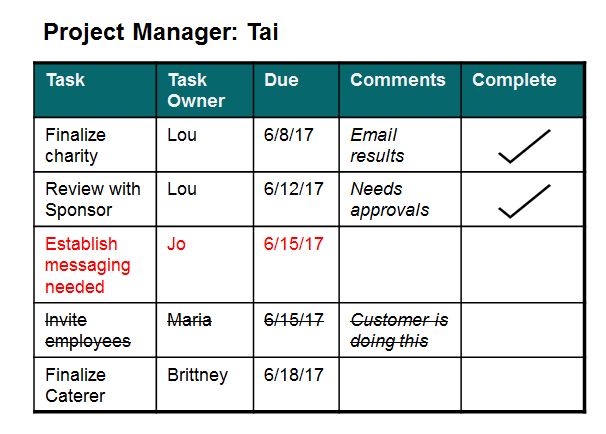 Thanks to Melissa Westmoreland for provoking this post: I understand your frustration. There are some very cool tools for scheduling projects and every time I try to use one, it doesn’t do what I
Ever feel like you are constantly measured?
 While it probably happens earlier, I think the wagon of measurement gets wheels in school. When kids are young and they tie their shoes or potty in the right place at the right time, it’s easy to see the accomplishment. But something suddenly changes, accomplishment has to be measured. Against a backdrop of helping a person grow into all they can be, measurement is a useful tool. However, it easily get’s off the track. The State of Indiana’s educational measurements (Mandatory Poorly Managed Standardization Tests) falls in that category for me, but it’s far bigger than that. Attend a kid’s extracurricular and shortly you will observe measurement of how valuable they are when calls are made, starters are picked, when placement is set – and you’ll also observe heated disagreement of measurements. To some people, that’s a measurement of ability and good competitive growth, to a growing number of kids it speaks directly to their value overall. It ain’t always “good for ‘em”. There is a huge countermeasure called “encouragement” that can really help.
Travel from Elementary, to Middle School (speaking of measurement, who’s idea was that?), High School, College and/or Military, Family, and Career. It’s a series of measurements. Some measurements are good and necessary, but our much of our society seems not to recognize the difference between accomplishment and individual value. Overall, a lot more could be made of encouraging folks of any age or background to use their strengths than is made of measuring. While there are a few exceptions, and they are few, I’ve found that seeking someone’s potential will produce a lot of fruit in many ways.
I’m enjoying the journey I’m now taking in Project Management. I enjoy going to work. A significant part of Project Management is about measurement on several levels. However, the best part to me is journeying with a team to seek, see and pursue potential. When you stir in encouragement, you’ll see it pretty quickly start to grow.
The idea of looking beyond the exterior to a person’s potential isn’t new. It’s quite ancient. Barnabas did that for Saul in the New Testament Book of Acts, chapter 9. Why not put potential seeking in line ahead of measurement of others today? Buckle up… cool things will happen.
 MaynardOnline.net